

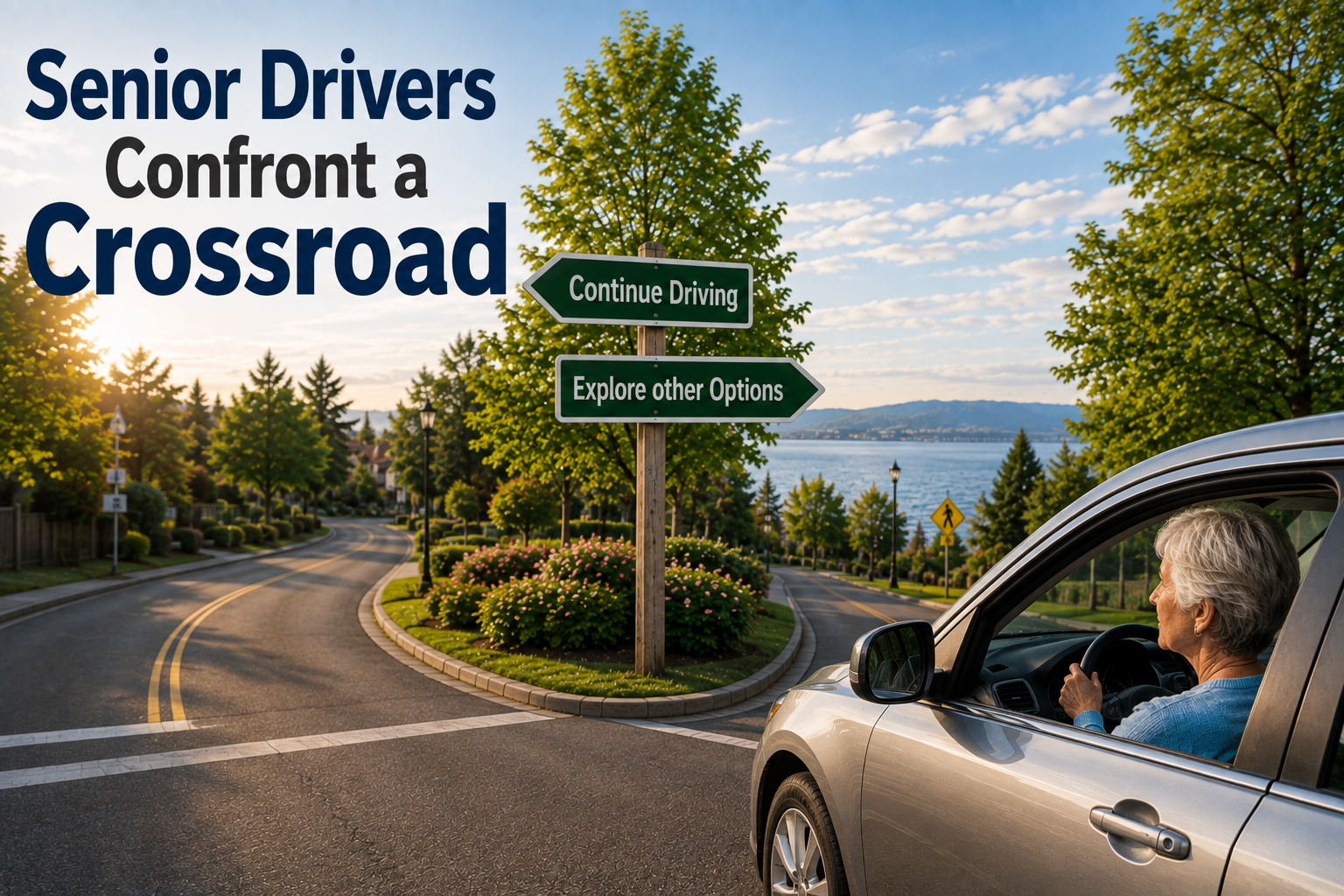
Senior Drivers Confront a Crossroad
It’s a rite of passage for young adults in Canada; earning the right to operate a motor vehicle is part of transitioning into adulthood.
In British Columbia, the process of obtaining that valuable document is considered more onerous than is the case in most other provinces. We have a Graduated Licensing Program that involves multi-year restrictions, mandatory supervision rules and strict zero-tolerance rules and, currently, a two-stage road test structure.
It’s all designed to ensure young drivers are well-prepared to enter the driving world and perform responsibly. The program seems to be working reasonably well. British Columbia ranks somewhere in the middle of the pack among Canadian provinces when it comes to road safety. BC experiences 7.9 car crash fatalities per 100,000 licensed drivers, a stat that places us close to Alberta and Manitoba. Perhaps surprisingly, Ontario and Quebec rank as the safest provinces.
BC ranks fifth in the safety rankings when it comes to young drivers. However most alarming is the statistic that ranks British Columbia dead last in terms of drunk driving arrest rates. The province has initiated strict Immediate Roadside Prohibition laws and that, combined with aggressive enforcement, may explain some of the troubling high impairment rates being recorded, but clearly there is work to be done in this area.
Once prospective British Columbia drivers have negotiated the curves and conditions of securing a driver’s license, things tick along nicely for the next fifty, sixty or even seventy years. Drive by the rules, pay attention to what you’re doing and you’ll be fine.
But like most things in life, there will be a day of reckoning. The relentless turning of the calendar comes into play.
At some point senior drivers will have a decision to make … or have one made for them. It’s time to turn in the keys and move over to the passenger seat.
For some, the decision is relatively painless, an admission that they are no longer able to operate a vehicle safely.
Larry B. for example. A skilled professional driver who logged hundreds of thousands of kilometres for 65 years with a clean record, Larry made a life-altering decision when he entered his early eighties and began to experience one of the clear signs of dementia. He would fall asleep frequently during the day, usually in a comfortable chair at home. But not always. It happened while driving and while no one was hurt in that mishap, Larry knew his driving life was over.
“It was a no-brainer,” he explains. “I didn’t want to wind up killing somebody. It was time.”
Another Vancouver Island driver, Roy, took a similar position. With eyesight diminishing, Roy found a creative solution to his predicament.
“I made a deal with my granddaughter,” Roy says. “We gave her our car, and she agreed to take us to appointments when we needed to go somewhere. It has worked out well.”
Not only did Roy remove himself from a potentially dangerous situation, but he also eliminated the costs of insuring and maintaining a vehicle.
Unfortunately, not every situation is as positive. Men in particular, see the loss of driving privileges as a slap in the face. Their ego is threatened; their ability to be useful is in jeopardy. And they just happen to like the driving thing. Unlike women who tend to regard getting behind the wheel as the best way to get from A to B, throughout their lives men have regarded driving as an expression of their personality. From the type of car they drive and, often, in the manner in which they handle that gorgeous hunk of steel and chrome, men are aware that their persona is on display.
The potential loss of a driver’s license can cause rifts between doctors, caregivers, and family members.
In British Columbia, once senior drivers hit the age of 80, they must complete a medical examination. A doctor or nurse practitioner reviews vision, cognition and physical fitness. Depending on the outcome, the driver may be required to have further testing. Or, if all is well, it’s back on the road again.
DriveSmart BC urges senior drivers not to panic after their 80th birthday celebration.
“Cognitive screening is only one part of the assessment process. Licensing decisions are based on all available medical information,” DriveSmartBC explains.
“Families should discuss their concerns with the driver’s physician or nurse practitioner. Early assessment can help identify problems while allowing many people to continue driving safely.”
DriveSmart BC says cognitive screening helps physicians make informed decisions about medical fitness to drive. Most older drivers remain safe drivers for many years, and these assessments are intended to support safe mobility rather than remove driving privileges simply because someone reaches a certain age.
(Check out DriveSmart BC for more information)
The good news, according to DriveSmartBC, is that most older drivers continue to drive safely for many years. Cognitive screening is intended to help physicians identify medical conditions that may affect driving ability while allowing people who remain medically fit to continue driving safely. Decisions about licensing are based on the overall medical evidence rather than age alone.
For seniors who have lost their driver’s license, it’s not the end of the world. There are options to be considered. Check out the next edition of the Seniors 101 newsletter for some helpful suggestions.
Warren Goulding is a retired Vancouver Island-based journalist and author of the Canadian bestseller, Just Another Indian: A Serial Killer and Canada’s Indifference.
He can be reached at: publisher@askewcreek.com