

Dr. Jeff Grognet DVM & Dr. Louise Janes DVM March 2011
Current Article ∙ Archive ∙ Back to Island Voices
Managing Arthritis
by Jeff Grognet, DVM, BSc (Agr) and Louise Janes, BSc(Agr), DVM
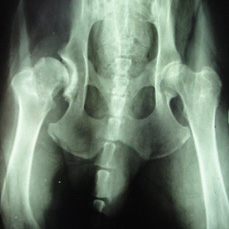
Researchers tell us that one in five adult dogs suffers from arthritis.
But, there is no reason these dogs can’t enjoy full lives. Cats are even better at hiding the pain and often suffer in silence. We have a myriad of ways to address this malady, including pet-specific painkillers, fortified diets, and a broad array of complementary therapies.
The critical first step is convincing owners that their pets are in pain. Some just can’t recognize it. They say that their pet can’t be sore because he isn’t crying or moaning. Because of their nature, pets rarely make a sound, even when in extreme pain. You have to look out for other signs.
The first indication of discomfort is stiffness when getting up and decreased enthusiasm for exercise. Another sign is hesitation when jumping in the car or difficulty getting up or down stairs.
Limping is an inconsistent sign. If a dog is sore in one leg, he is lame. However, if he has pain in both legs, he can’t limp because he can’t put all the weight on one leg. He just has trouble moving.
Pets with arthritis slow down, their muscles waste from lack of use, they gain weight, and even walking becomes a chore.
I have two techniques for diagnosing arthritis. I start with palpation, feeling joints for swelling and muscles for soreness. When I move a joint, I may find that it does not have the range of motion that it should. This restriction strongly suggests arthritis. In some joints, I can feel a roughness (what is called crepitance) as it’s flexed, suggesting a boney buildup from arthritis.
The second method is radiographs, which I use to confirm the disease. These tell me which joints are involved and to what extent, which guides treatment and suggests if it is going to be along-term problem or not.
The first topic I talk about with owners of arthritic dogs is nutrition. Being just 10 percent over optimum weight means exaggerated joint pain. So, in most cases, I am counseling clients about weight reduction. Even a small loss of weight can have a tremendous impact on the requirement for pain control.
What I ultimately aim for is being able to feel the ribs without much finger pressure and seeing a waist (an indentation behind the ribs) when viewed from above.
Also, type of food has an impact. Some foods are specially formulated to help dogs with joint disease. Commercial foods containing glucosamine can help some dogs, but the amount added usually isn’t usually enough to be therapeutic. Supplements can help. These include glucosamine and arthritis preparations like Recovery.
When I first became a veterinarian, there was little in the way of painkillers for dogs. We used to give cortisone injections that relieved the pain quite well. We also used acetylsalicylic acid (ASA – Aspirin), which worked on mild pain. Both of these medications are fraught with side effects and rarely used these days.
In the last 15 years, a large group of medications called non-steroidal anti-inflammatory drugs (NSAIDs) have been developed for dogs. Rimadyl, Metacam, and Deramaxx are examples. They are very effective in treating moderate to severe chronic arthritic pain. Most dogs tolerate NSAIDs well, but all of these medications have the potential to cause stomach irritation.
I use Metacam because of its safety in many arthritis dogs. The goal is to use it daily, but decrease the dose as low as possible.
Nutraceuticals are nutritional supplements that possess medicinal effects. I’ve already mentioned glucosamine in foods. Along with chondroitin, these block the negative effect of cartilage-damaging enzymes and improve nutrition to joint cartilage, improving joint motility and lessening pain. About 2/3 of dogs show clinical improvement with these supplements. Omega-3 fatty acid supplements (e.g. salmon oil) are also useful.
Antioxidants are supplements that neutralize free radicals, the chemicals that damage cartilage and create inflammation. These include vitamins A, C, and E, as well as the mineral selenium.
Herbs also play a role in arthritis treatment. Boswellia and curcumin have anti-inflammatory properties.
Physical therapy plays a supportive role in arthritis. Regular massage not only provides your dog with physical comfort for his sore muscles, but the close touch also enhances bonding between you and your companion. It can range from gentle massage for reducing muscle spasms to aggressive massage to break down adhesions. Passively flexing and extending joints helps prepare for exercise.
Hot and cold packs both have their respective roles in managing arthritis. Heat application to joints before exercise promotes easier movement. Cold packs, on the other hand, are used to reduce the inflammation in painful joints following exercise.
Acupuncture involves the insertion of fine needles at predetermined acupuncture points. It reduces pain by releasing endorphins, the body’s natural painkillers, and by blocking pain transmission to the brain.
Regular exercise assists arthritic dogs by maintaining muscle mass and retaining (or restoring) range of motion in the joints. Begin an exercise program with slow walks. It may only be 10 minutes twice a day, but start slowly and build up from there. If the exercise causes pain, it means you went too far or too fast. Avoid strenuous activities like ball retrieval or Frisbee catching because sudden movements can twist arthritic joints, causing extreme pain.
Swimming and water walking are excellent forms of exercise for arthritic dogs. Both are low impact and they take the weight off the joints while allowing the muscles to get a good work out.
Frequency-specific low level laser (light therapy) is proving it can help 95% of dogs and cats with arthritis. It has no side effects and is easy to administer. We utilize this the most at our hospital and can often reduce or eliminate medication.
There is no reason an arthritic pet should suffer in silence. If you have an older friend, look for symptoms that could suggest pain. If you suspect arthritis, see your veterinarian and get it confirmed. Then, you can start on a program to help your friend cope with his disease.
Suggested Program for Hip Dysplasia
The following program contains many ideas for managing a dog with hip dysplasia. Not all of the treatments will be utilized, but you can tailor it to meet the needs of the individual patient and achieve maximum comfort.
Week One
- supplements(1)
- glucosamine, Omega-3 fatty acids (introduce these slowly, one at a time)
- begin weight reduction program if required
- light therapy pain control with analgesics(2)
- passive movement (flex and extend) 10-15 times, 2 to 3 times daily
- exercise – slow leash walks 10 to 20 minutes, 2 to 3 times daily
Weeks Two to Four
- light therapypassive movement
- slowly increase length of walks
- walk on stairs or do sit-stand exercises twice daily
- if available, swim for 3 to 5 minutes 3 times weekly and slowly build up
- continue analgesics as needed
Weeks Five to Twelve
- light therapy reduced to every 4 weeks
- try to phase out analgesics
- tailor a maintenance program to meet the needs of the individual
(1) For a 70 pound dog (adjust for body weight proportionately), give 1000 mg glucosamine (with or without chondroitin) to nourish joint cartilage, 2000 IU vitamin A, 1000 mg vitamin C, 800 IU vitamin E, and 25 micrograms of selenium as antioxidants, and 2000 mg Omega-3 fatty acids (fish oil or flax oil) to reduce inflammation.
(2) Analgesics should be dispensed by your veterinarian.
For more information contact Dr. Jeff Grognet or Dr. Louise Janes at
Mid-Isle Veterinary Hospital
5-161 Fern Road West
Qualicum Beach, BC
Tel (250) 752-8969