

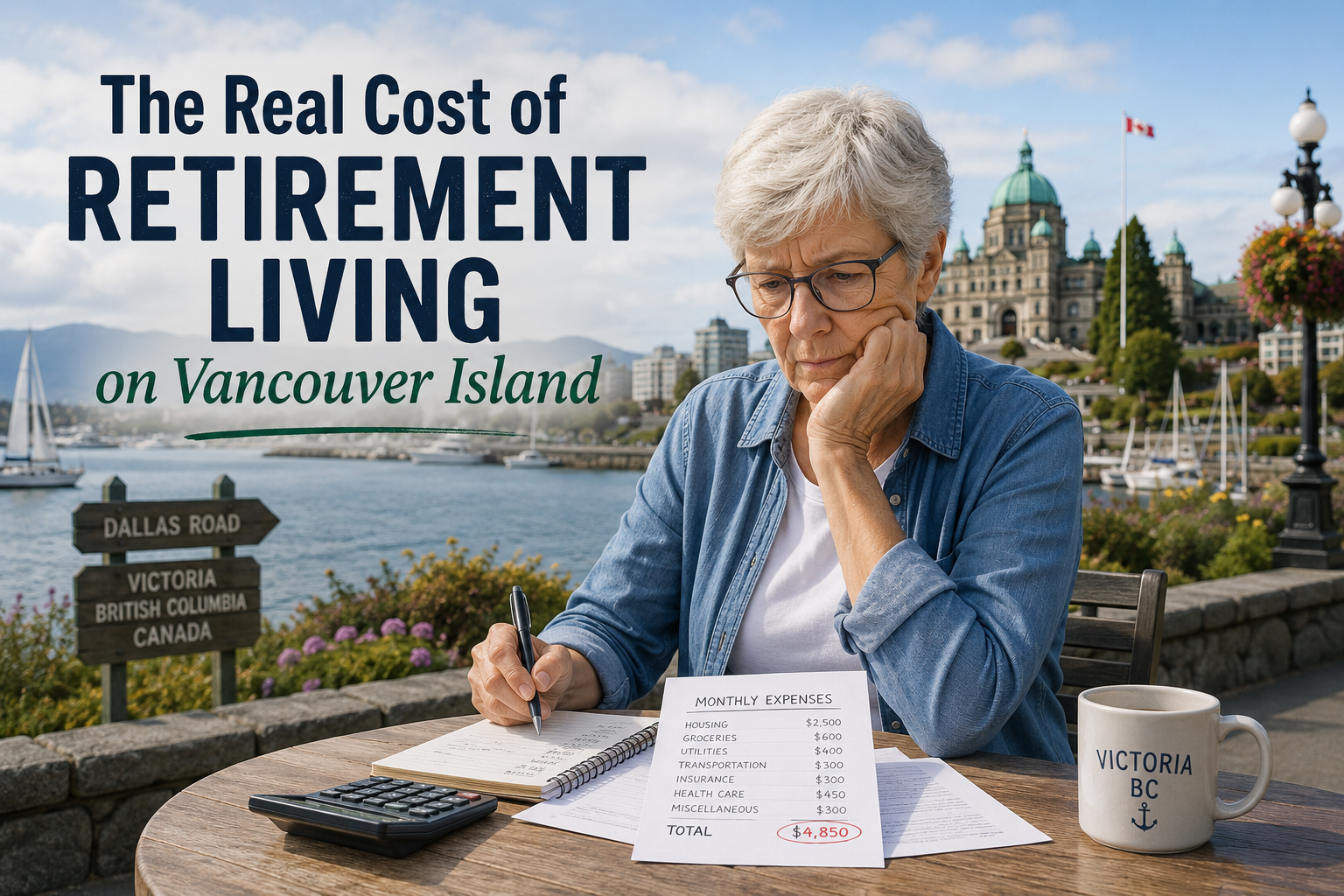
The Real Cost of Retirement Living on Vancouver Island
Retirement on Vancouver Island is highly desirable: Mild winters. Ocean views. Walkable communities. Time to enjoy family, hobbies, travel, and the lifestyle you’ve worked decades to achieve.
But there is a reality many retirees discover too late.
Retirement on Vancouver Island is becoming increasingly expensive, and the biggest threat to your financial security isn’t inflation, stock market volatility, or even healthcare costs. It’s underestimating how much retirement will actually cost.
Many enter retirement believing their expenses will decline once the paycheques stop. It’s true that many costs such as commuting to work and raising kids disappear, but others rise dramatically. Housing, insurance, utilities, property taxes, transportation, home maintenance, and personal care can consume far more of your retirement income than expected.
The result? Seniors who thought they were financially secure find themselves making difficult decisions later in life.
The Myth of the Mortgage-Free Retirement
One of the biggest financial misconceptions is that once your mortgage is paid off, your housing costs become minimal. Unfortunately, it isn’t true.
Let’s look at a typical homeowner in Victoria or Nanaimo who owns a mortgage-free home.
Property taxes on a modest size family home can easily exceed $3,000 to $5,000 annually depending on the home’s assessed value. Utilities often add another $2,400 to $4,000 per year. Home insurance, repairs, appliance replacement, landscaping, gutter cleaning, tree maintenance, and routine upkeep can add thousands more.
Suddenly, a “free” house costs $8,000 to $15,000 a year just to maintain.
And that’s before replacing a roof, repairing a deck, upgrading a furnace, or addressing accessibility issues. The reality is that many retirees are housing-rich and cash-flow poor.
Retirement Communities Aren’t as Expensive as You Think
Mention retirement living and many people immediately assume they can’t afford it. Yet when you compare the true cost of maintaining a home, the numbers often tell a different story. Current retirement living costs in British Columbia generally range between $3,400 and $6,500 per month depending on location, services, and accommodation style. That sounds expensive until you consider what is often included:
• Meals
• Utilities
• Housekeeping
• Maintenance
• Security
• Social activities
• Transportation
• Fitness programs
In many cases, retirees are already spending a significant portion of those costs while continuing to shoulder the responsibilities of homeownership. The question isn’t whether retirement living costs more. The question is whether you’re comparing apples to apples.
The Expense Nobody Wants to Talk About
The fastest-growing retirement expense isn’t housing. It’s care. Today you may be healthy, active, and independent. Ten years from now, your situation could be very different.
According to the BC Seniors Advocate, demand for long-term care beds continues to outpace supply, creating growing pressure on seniors and families. Private assisted living in British Columbia commonly ranges from approximately $3,500 to $9,000 per month, depending on location and level of support required. Private long-term care can cost even more. In some cases, monthly fees exceed $8,000 to $12,000 per month. Most retirees never include these numbers in their retirement planning.
Inflation Is Quietly Eroding Retirement
Here’s a simple example.
If you live on a $4,000 per month budget today and inflation averages just 3% annually, you’ll need more than $5,300 per month ten years from now to maintain the same lifestyle. Twenty years from now, you’ll need over $7,200 per month.
That’s without upgrading your lifestyle. That’s simply maintaining it. This is one reason financial planners are increasingly concerned about longevity risk—the possibility of living longer than your money lasts. For healthy retirees in their 60s, retirement can easily span 25 to 35 years. That’s a long time for prices to keep rising.
The Victoria Premium
Many people move to Vancouver Island expecting a more affordable lifestyle than Vancouver. While that’s often true, Victoria is hardly inexpensive. Recent retirement planning studies estimate that Victoria remains one of Canada’s more costly retirement destinations, requiring substantially more retirement savings than many communities elsewhere in the country. The same factors that attract retirees—climate, scenery, healthcare access, and lifestyle—also attract other buyers, helping keep housing prices elevated. The result is a retirement paradise that comes with a premium price tag.
What Retirees Consistently Underestimate
After speaking with financial planners, senior housing providers, and retirement experts, we find the same budgeting mistakes appear repeatedly. People underestimate home maintenance. They underestimate inflation. They underestimate future care needs. They overestimate how long they will continue driving.
Most importantly, they assume their current health will continue indefinitely. Read “The Retirement Risk No One Wants to Talk About”
The reality is, if you’re fortunate enough to live into your 80s or 90s, the odds are overwhelming that your health needs will change significantly. The financial question isn’t whether you’ll need help—it’s how much help you’ll need and who will pay for it.
Retirement planning isn’t something you do at 65 and forget about. It’s something you review every year.
The Question You Should Be Asking
Most people ask: “How much money do I need to retire?” That’s the wrong question. A better question is: “What lifestyle do I want, and what will it cost to maintain it for the next 30 years?”
The answer is different for everyone. For some, retirement means staying in a family home, volunteering and spending time with grandchildren. For others, it means travelling, golfing, or moving into a vibrant retirement community. The key is understanding the costs before they become an issue.
Financial Security Comes from Planning, Not Luck
Retirement on Vancouver Island can be extraordinary. But it won’t happen by accident. The retirees who thrive financially are rarely the ones with the largest pensions or investment accounts. They are the people who understand their expenses, anticipate future challenges, and adjust their plans before circumstances force difficult decisions.
Interested in more articles about Finances? Click Here >>>