


Aging in Place vs. Moving: What’s Right for You?
If you’re over 60, one of the most important decisions you’ll face is aging in place vs. moving to a community. Will you remain in your current home or move to a more suitable living environment?
The choice you make will affect your finances, your health, your independence, and your quality of life for years to come.
For many, the answer seems obvious. You’ve lived in your home for years, perhaps decades. It holds memories of raising children, celebrating milestones, hosting family gatherings, and building relationships with neighbours. Leaving can feel like leaving part of your life behind.
“The desire to remain at home is nearly universal among older Canadians. According to research cited by the Government of Canada, 96% of Canadians aged 65 and older say they want to age in place—remaining in their own home and community for as long as possible.”
Government of Canada: “Housing supply needs and challenges for a diverse seniors population in Canada”
But the question isn’t whether you love your home. The question is whether your home will continue to support the life you want to live.
“The challenge is that wanting to stay at home and being able to stay at home are two very different things. Recent research from the National Institute on Ageing found that while most older Canadians want to remain in their homes, fewer than half believe their homes are fully prepared to support them as they age.”
Manulife: “Retiring at home: how you can plan for ‘aging in place”
Across Vancouver Island, thousands of seniors are facing this decision. Some will remain in their homes successfully for many years. Others will discover that moving earlier provides greater freedom, better social connections, and a higher quality of life. The families who make the best decisions start planning before a health crisis forces them to act.
Why Aging in Place Appeals to So Many Seniors
Your home provides familiarity, comfort, and independence. You know the neighbourhood. You have favourite stores, restaurants, walking routes, and community organizations. You know where everything is and how everything works.
• Aging in place allows you to:
• Stay close to family and friends
• Maintain your daily routines
• Keep your pets
• Remain connected to your community
• Continue living life on your own terms
Today’s seniors also have access to services that simply didn’t exist a generation ago.
Throughout Vancouver Island, organizations such as Island Health, Better at Home, Family Caregivers of BC, and local seniors’ centres provide support services that help older adults remain independent. Transportation assistance, meal delivery, housekeeping, friendly visiting, wellness checks, and home support services all make it easier to continue living at home. If your home remains safe and manageable, these services will help you maintain your independence longer.
Take an Honest Look at Your Home
Here’s a reality many people avoid: the home that works for you today will not necessarily work for you ten years from now. You need to ask yourself some difficult questions.
• Can you safely navigate stairs every day?
• Can you maintain your yard and garden?
• Can you handle home repairs and ongoing maintenance?
• What happens if you can no longer drive?
• Who helps you if you experience a fall or medical emergency?
If your answers make you uncomfortable, that’s not necessarily a sign you need to move. It is a sign that you need a plan.
Many homes on Vancouver Island were built long before accessibility became a priority. Steep driveways, narrow hallways, multiple levels, poor lighting, and slippery bathrooms create challenges that become more significant as we age. You should also think beyond the physical structure of your home.
• How close are you to medical services?
• Can you easily access groceries and pharmacies?
• Do you have family nearby?
• Are you becoming socially isolated?
Loneliness is one of the greatest threats to healthy aging. Many seniors focus on maintaining their homes while overlooking the importance of maintaining social connections. The reality is that isolation affects both physical and mental health. When this author held a career as community relations manager, nearly all the seniors who chose to join the Kensington community in Victoria moved in because they were lonely and wanted to be part of a community.
If You Stay, Make Sure Your Home Works for You
If aging in place is your goal, don’t wait until a crisis forces changes. Start preparing your home now. Simple improvements will significantly improve your safety and independence:
• Install grab bars in bathrooms
• Replace bathtubs with walk-in showers
• Improve lighting throughout your home
• Add handrails where needed
• Install non-slip flooring
• Create a no-step entrance
• Widen doorways if mobility aids become necessary
• Consider smart-home safety technology
Many people postpone these upgrades because they don’t need them today. That’s exactly why you should make them now. Planning ahead gives you more choices, lower costs, and far less stress than trying to make modifications after an injury or hospitalization.
Organizations such as the Office of the Seniors Advocate BC, BC Housing, and the Seniors Services Society of BC provide information about grants, accessibility programs, and resources that help seniors remain safely at home. Here is a link to our RAHA Grant for Seniors article which might be useful for you.
Understand the Real Cost of Staying Home
Many homeowners assume staying put is always the less expensive option. That assumption is often wrong. When calculating housing costs, you need to look beyond your mortgage payment or property taxes. Consider everything:
• Property taxes
• Utilities
• Home insurance
• Repairs and maintenance
• Landscaping and yard care
• Housekeeping
• Transportation
• Accessibility upgrades
• Home support services
As you age, many of these expenses increase. A large home that once suited a growing family can become expensive, time-consuming, and physically demanding to maintain. You may discover that a smaller home, condominium, retirement residence, or assisted living community provides greater value while significantly reducing your responsibilities.
Why Moving Can Increase Your Independence
Many people view moving as giving up independence. In reality, moving often preserves your independence longer than staying in an unsuitable home. Think about how much time, money, and energy homeownership requires.
• Roof repairs.
• Yard maintenance.
• Cleaning.
• Property upkeep.
• Security concerns while travelling.
• Unexpected repairs.
When those responsibilities begin consuming your time and energy, your home starts working against you rather than for you.
Moving allows you to focus on living instead of maintaining.
Many retirement communities on Vancouver Island have changed dramatically over the past decade. Today’s communities focus on active lifestyles, wellness, fitness, lifelong learning, and social engagement. You gain access to:
• Organized activities
• Fitness programs
• Dining services
• Transportation options
• Housekeeping support
• New friendships
• Built-in social opportunities
For many residents, the increased social interaction is one of the greatest benefits.
You Have More Options Than You Think
A mistake families make is viewing housing as a simple choice between staying home and entering long-term care. The reality is far more flexible. You have options:
Independent Living
Perfect if you want to eliminate home maintenance while maintaining a fully independent lifestyle.
Assisted Living
Ideal if you need help with meals, housekeeping, medication management, or other daily tasks while remaining largely independent.
Supportive Housing
Provides varying levels of assistance while allowing you to retain significant control over your daily life.
Long-Term Care
Designed for individuals who require 24-hour nursing care and ongoing medical support.
Island Health provides information about publicly subsidized housing and care options available throughout Vancouver Island. Understanding these options now will help you make informed decisions later.
Don’t Wait for a Crisis
This may be the most important advice in this article. Don’t wait until a fall, hospitalization, or health emergency forces a decision. Too many families postpone these conversations because they feel uncomfortable. Then a crisis occurs and decisions must be made quickly, often with fewer choices available.
Start planning now.
Talk with your spouse.
Talk with your children.
Meet with a financial advisor.
Research retirement communities.
Visit housing options before you need them.
Learn about local support services.
Even if you ultimately decide to remain in your current home, you’ll do so with confidence because you’ve explored your alternatives.
Resources for Vancouver Island Seniors
If you’re beginning to plan, these organizations provide valuable information and support:
• Seniors101.ca
• Office of the Seniors Advocate BC
• Island Health Home and Community Care Services
• Better at Home Programs
• BC Housing
• Family Caregivers of British Columbia
• Seniors Services Society of BC
• United Way BC
• BC 211 Information and Referral Services
The Goal Is to Live Well
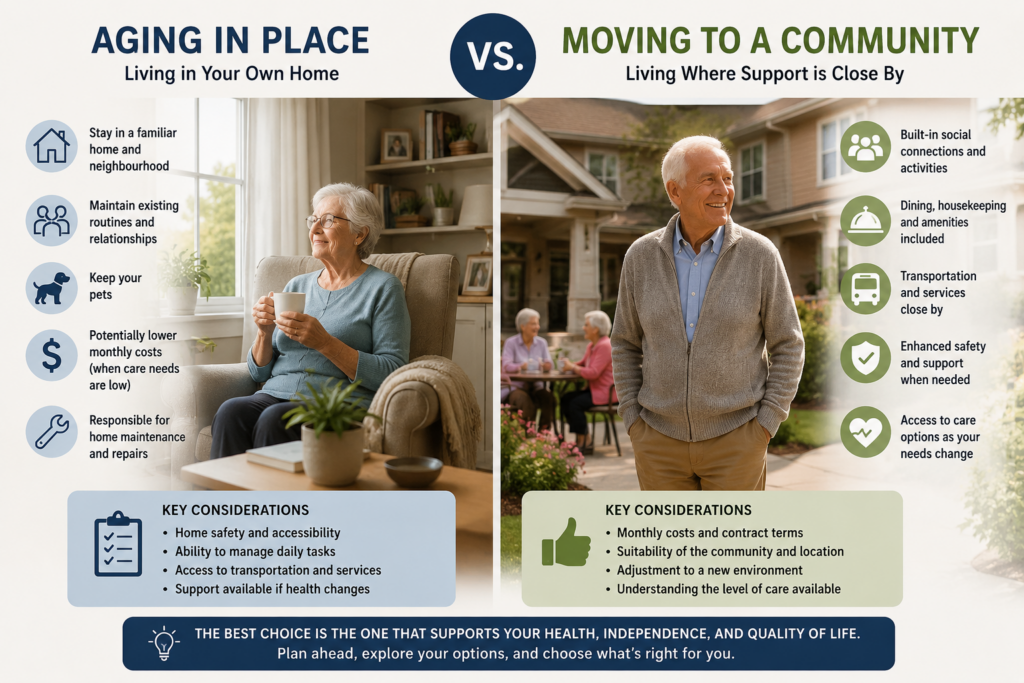
The goal isn’t to stay in your home for as long as possible. The goal is to live safely, remain connected to your community, and maintain the highest quality of life possible. For you, that may mean remaining in your current home for many years to come. For someone else, it may mean downsizing, moving into a retirement community, or transitioning to a more supportive environment.
What’s the right choice?
What matters is making the decision deliberately rather than having it made for you. The families who fare best are those who plan, explore their options early, and make decisions from a position of strength rather than necessity. Your future housing decision isn’t really about where you live. It’s about how you want to live.